About The Bunbury Glasshouse — A Cheshire Niwaki Nursery

Our Family
Grown From the Beginning
Our Family
We are Rebecca and Alex Dromgoole, the founders of The Bunbury Glasshouse. Our passion for heritage plants sparked long before the establishment of the nursery. Over more than 12 years together, we have propagated thousands of seedlings and cultivated plants for our own garden, learning through observation, experimentation, and plenty of
We are Rebecca and Alex Dromgoole, the founders of The Bunbury Glasshouse. Our passion for heritage plants sparked long before the establishment of the nursery. Over more than 12 years together, we have propagated thousands of seedlings and cultivated plants for our own garden, learning through observation, experimentation, and plenty of mistakes along the way. The Bunbury Glasshouse emerged from that shared enthusiasm — a commitment to apply what we have learned and dedicate ourselves to the cultivation of exceptional Japanese-inspired garden trees and Niwaki specimens.
Our Story
Grown From the Beginning
Our Family
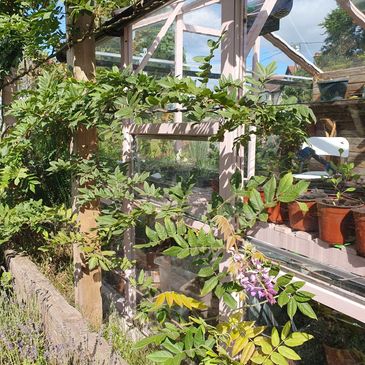
The Bunbury Glasshouse began at home, featuring two greenhouses, a collection of seedlings, and a growing fascination with the art of training trees. What started as a passion for propagating heritage plants gradually evolved into something more ambitious: the creation of a specialist Cheshire nursery focused on cultivating trees slowly,
The Bunbury Glasshouse began at home, featuring two greenhouses, a collection of seedlings, and a growing fascination with the art of training trees. What started as a passion for propagating heritage plants gradually evolved into something more ambitious: the creation of a specialist Cheshire nursery focused on cultivating trees slowly, carefully, and purposefully. We are developing our collection from the ground up—raising plants from seed, taking cuttings from our own established stock, and, where appropriate, grafting selected varieties onto meticulously grown rootstocks. Our trees will spend many years in cultivation before they are ready for a garden. We believe that the time spent developing the trunk, roots, and branch structure is not something that should be hurried; it is an essential part of creating a truly exceptional specimen. The nursery is being built slowly because the trees are being grown at a deliberate pace.
.jpeg/:/rs=w:365,h:365,cg:true,m/cr=w:365,h:365)
Grown From the Beginning
Grown From the Beginning
Grown From the Beginning
We believe the quality of a mature specimen at the Bunbury Glasshouse begins long before it reaches the field. Wherever practical, our heritage plants are propagated from seed or cuttings taken from our own established stock. Selected varieties are grafted onto rootstocks that we have raised ourselves, allowing us to control more of the j
We believe the quality of a mature specimen at the Bunbury Glasshouse begins long before it reaches the field. Wherever practical, our heritage plants are propagated from seed or cuttings taken from our own established stock. Selected varieties are grafted onto rootstocks that we have raised ourselves, allowing us to control more of the journey from propagation to finished specimen. From the earliest stages, we pay attention to root development, trunk structure, and future branch architecture. The aim is not simply to grow a large tree, but to develop the foundations of a tree that can be shaped and refined for many years. This approach allows every generation of the Bunbury Glasshouse collection to begin here, rather than simply being purchased as finished nursery stock.